How to Choose a Reliable Aroma Diffuser Manufacturer: A 2026 B2B Buyer's Guide
For global brand owners and procurement managers, the aroma diffuser market offers a lucrative opportunity, but success hinges on one critical decision: how to choose a reliable aroma diffuser manufacturer. A dependable partner ensures product quality, timely delivery, and brand protection, while a poor choice can lead to recalls, lost revenue, and reputational damage. This guide provides a step-by-step framework for vetting suppliers, understanding certifications, and negotiating favorable terms in 2026.
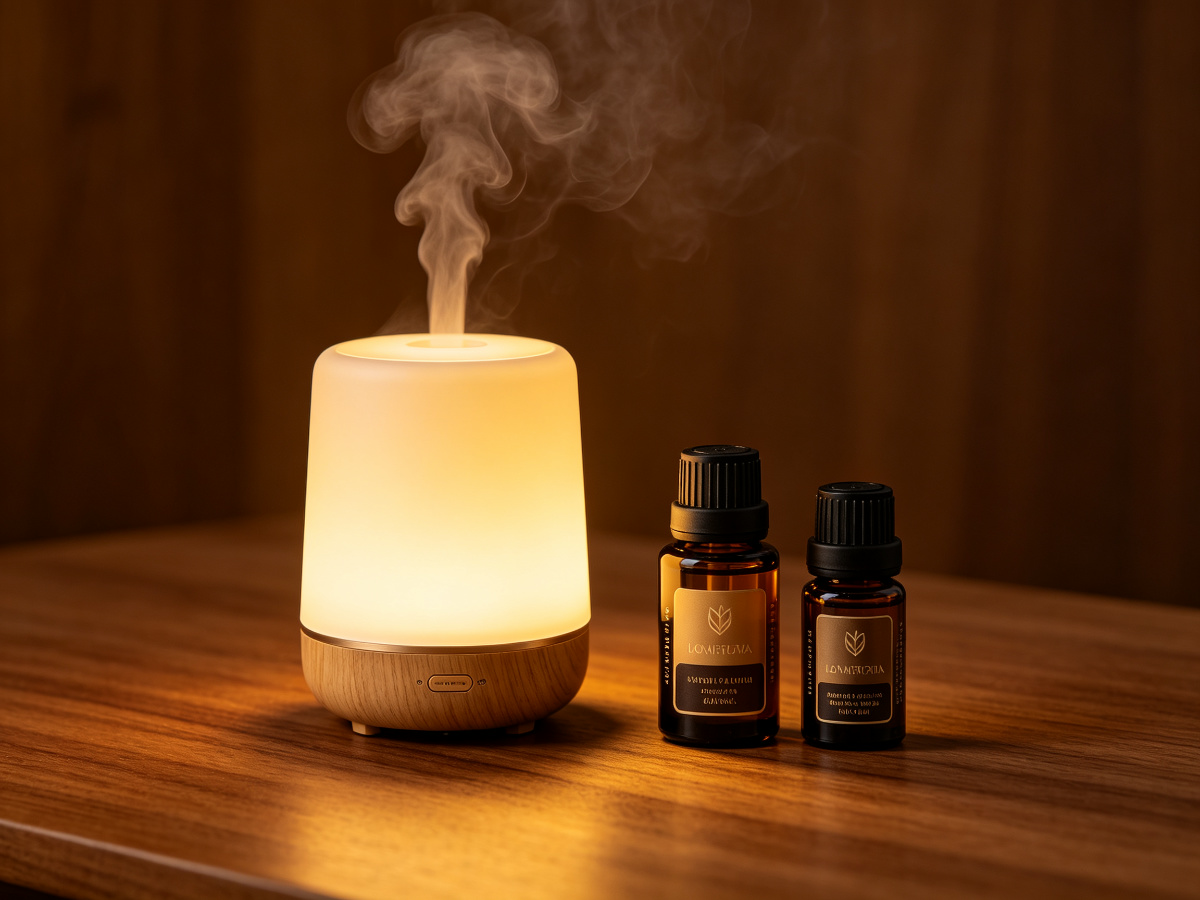
Key Factors to Evaluate in an Aroma Diffuser Manufacturer
Before diving into supplier outreach, define your product requirements. The aroma diffuser category includes ultrasonic, nebulizing, heat-based, and evaporative models. Each type suits different markets: ultrasonic diffusers are popular for home and spa use due to their quiet operation and affordability, while nebulizing diffusers are preferred for commercial spaces because they don't use water and preserve essential oil integrity. Your choice impacts manufacturing complexity, cost, and certification needs.
1. Manufacturing Capabilities and Technology
Assess whether the manufacturer specializes in your desired diffuser type. For ultrasonic diffusers, look for expertise in piezoelectric transducer production and plastic molding. For nebulizing diffusers, ensure they have experience with air pumps and glass or metal components. A reliable manufacturer will have in-house tooling, injection molding, and assembly lines, allowing for better quality control and faster lead times.
2. Certifications and Compliance
Certifications are non-negotiable for global distribution. At minimum, your manufacturer should hold ISO 9001 for quality management and ISO 22716 for cosmetic good manufacturing practices (if they also produce essential oil blends). For electrical safety, UL or ETL for North America, CE for Europe, and FCC for the U.S. are essential. Additionally, RoHS and REACH compliance ensure restricted substances are avoided. If you plan to sell in the EU, the manufacturer must be able to provide CE documentation, including a Declaration of Conformity and test reports from accredited labs. For FCC, they should offer a Grant of Equipment Authorization or a Supplier's Declaration of Conformity, depending on the device's wireless capabilities.
3. MOQ, Lead Times, and Pricing
MOQs vary widely. For standard ultrasonic diffusers, MOQs can range from 500 to 1,000 units. Custom-molded designs often require 2,000 to 5,000 units. Lead times for stock models are typically 15–30 days, while custom orders may take 45–60 days after sample approval. Pricing depends on materials, features (e.g., timers, remote controls, Bluetooth), and order volume. Expect FOB prices between $8 and $25 per unit for mid-range ultrasonic diffusers, and $30–$80 for nebulizing models. Always request a detailed quotation that breaks down tooling, components, assembly, packaging, and certification costs.
4. Quality Control and Testing
Ask about their QC process: incoming material inspection, in-process checks, and final random inspection (FRI) according to AQL standards. A reliable manufacturer will welcome third-party inspections (e.g., SGS, Bureau Veritas) and provide test reports for performance, safety, and durability. For ultrasonic diffusers, key tests include mist output consistency, noise level, and leak resistance. For nebulizing diffusers, pump lifespan and oil compatibility are critical.
How to Choose a Reliable Aroma Diffuser Manufacturer: A Step-by-Step Approach
Finding a trustworthy partner requires diligence. Follow this process to minimize risk.
Step 1: Define Your Specifications
Create a detailed product brief covering diffuser type, tank capacity, coverage area, power source, materials, colors, logo placement, and packaging. Include target certifications and desired price point. This helps suppliers quote accurately and reduces back-and-forth.
Step 2: Source and Shortlist Suppliers
Use B2B platforms like Alibaba, Global Sources, and Made-in-China, but also leverage industry referrals and trade shows (e.g., Canton Fair, Cosmoprof). Look for suppliers with at least 5–10 years of experience and a focus on aroma diffusers. Check their Home page and Knowledge Center for technical insights. For a deeper dive, read How to Choose the Top Rated Aroma Diffus.
Step 3: Request Samples and Evaluate Quality
Order samples from your top 3–5 suppliers. Test mist output, noise, build quality, and ease of use. Compare against your specifications. Also, inspect the packaging and manual for professionalism. A supplier that invests in clear documentation is often more reliable.
Step 4: Audit the Factory
Conduct a virtual or on-site audit. Check production capacity, equipment, cleanliness, and worker safety. Verify certifications on-site. If you can't visit, hire a third-party auditor. This step is crucial to confirm the supplier's claims.
Step 5: Negotiate Terms and Contracts
Discuss MOQ, price, payment terms (e.g., 30% deposit, 70% before shipment), lead times, and penalties for delays. Ensure the contract includes confidentiality, intellectual property protection, and quality guarantees. Clarify warranty and after-sales support.
Step 6: Pilot Production and Scale Up
Start with a small trial order to validate quality and communication. Once satisfied, scale up gradually. Maintain regular communication and schedule periodic audits to ensure ongoing compliance.
Common Mistakes to Avoid
- Choosing on price alone: The cheapest option often cuts corners on safety and durability, leading to higher long-term costs.
- Ignoring certifications: Without CE, FCC, or UL, your products may be blocked at customs or recalled.
- Overlooking communication: Language barriers and slow responses can derail timelines. Test responsiveness during the inquiry phase.
- Skipping samples: Never commit to mass production without thoroughly testing samples.
- Not visiting the factory: Even a virtual tour can reveal red flags like outdated equipment or poor organization.
Questions to Ask Aroma Diffuser Suppliers
Use this checklist during supplier conversations:
- What is your monthly production capacity for aroma diffusers?
- Which certifications do you hold for your diffusers? Can you provide test reports?
- What is your MOQ for standard and custom designs?
- What are your lead times for samples and mass production?
- Do you offer OEM/ODM services? What is the process for custom molding?
- How do you handle quality issues or returns?
- Can you provide references from existing clients?
- What are your payment terms?
- How do you ensure FCC and CE compliance for different markets?
- Do you have experience with essential oil pairing and private label kits?
Conclusion
Mastering how to choose a reliable aroma diffuser manufacturer is essential for building a successful product line. By evaluating capabilities, certifications, quality control, and communication, you can secure a partner that supports your brand's growth. Remember to start with clear specifications, request samples, audit factories, and negotiate fair terms. For personalized assistance, Contact Us at aaoem. Our team can guide you through the OEM/ODM process and connect you with vetted manufacturers. With careful due diligence, you'll find a reliable partner to bring your aroma diffuser vision to life in 2026 and beyond.
For product catalog, quotation, or sampling, please contact us
Contact: SIGE
Email: 27005046@qq.com
WhatsApp / WeChat: +86 15622220825
Website: aaoem.com