Aroma Diffuser OEM Manufacturer Guide 2026: Practical Sourcing for Global Brands
For global beauty brand owners and purchasing managers, finding a reliable aroma diffuser OEM manufacturer is the first step toward a successful product launch. The diffuser market keeps growing in 2026 — the global scale is projected to pass USD 4.5 billion, with Chinese supply chains accounting for more than 70% of capacity. However, with hundreds of factories in Guangdong, Zhejiang and Jiangsu, how do you tell which partners truly have R&D, quality control and compliance capability? This practical guide systematically breaks down the core factors in diffuser OEM/ODM sourcing to help you avoid pitfalls and lock in a cost-effective supplier. As an OEM/ODM manufacturer focused on cosmetics and home fragrance, AAOEM has prepared this complete guide from years of serving global brands.
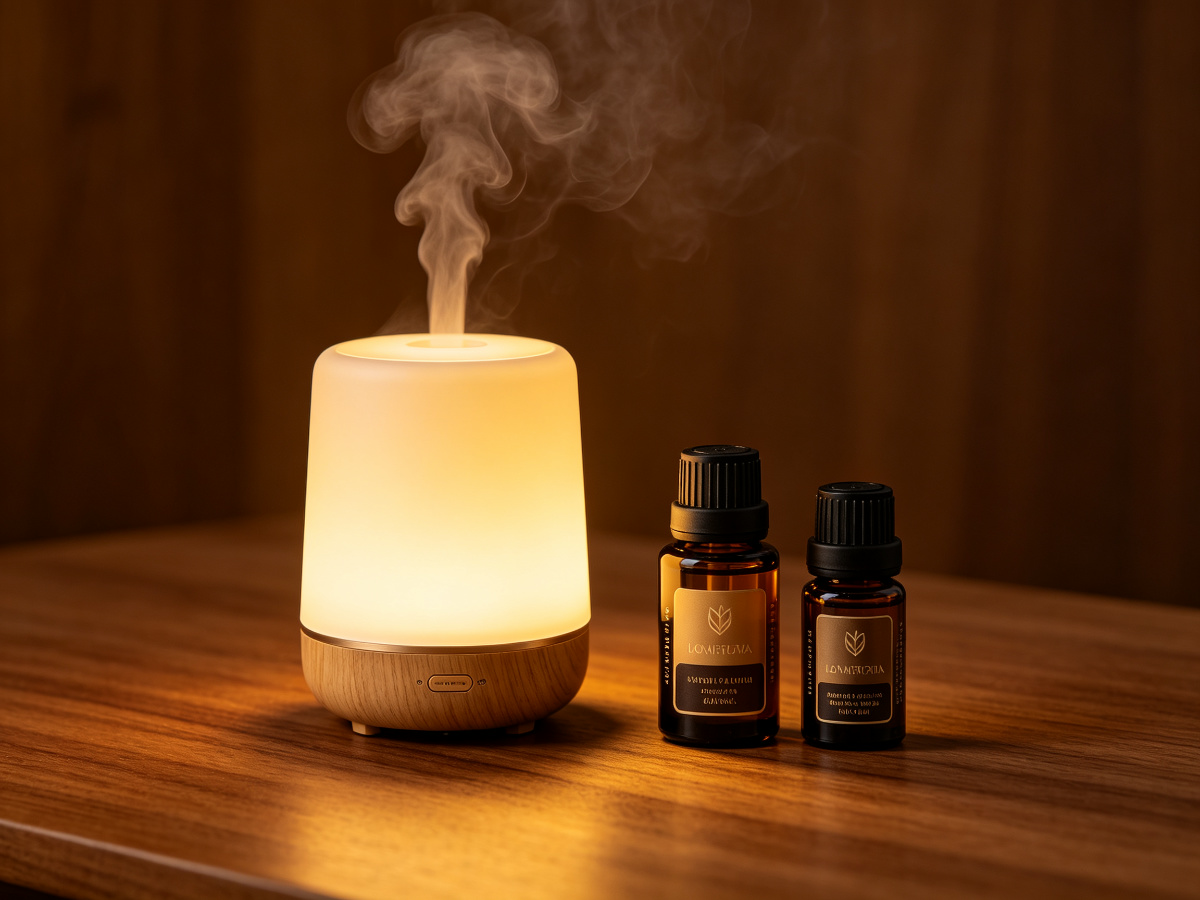
Why Use an Aroma Diffuser OEM Manufacturer Instead of Building Your Own Line?
Building your own diffuser line requires injection machines, ultrasonic welding equipment, aging test rooms and other fixed assets — initial investment usually exceeds USD 800,000, plus certification barriers such as CE, FCC and RoHS. With a professional diffuser OEM, brands can:
- Lower startup cost: no plant or equipment investment; MOQ starts at 500–1,000 units.
- Shorten time to market: design to mass production in 45–60 days, about 3x faster than an in-house line.
- Get compliance support: factories hold ISO 22716, GMP and FDA, ensuring EU/US regulatory readiness.
- Scale flexibly: reorder quickly based on sales data and avoid inventory buildup.
If you also sell scented candles or reed diffusers, see our Scented Candle OEM Manufacturer and Reed Diffuser Wholesale Factory guides for one-stop fragrance line sourcing.
Core Evaluation Dimensions for a Diffuser OEM Manufacturer
1. R&D and customization capability (ODM vs OEM)
What do diffuser ODM services include? Usually appearance design, structural optimization, atomization solution selection, PCB program development and APP/smart-control integration. Strong ODM factories provide full-service 3D modeling, hand samples and pre-compliance testing. Pure OEM factories only process to drawings — suitable for brands with mature designs. When evaluating, confirm:
- Do they have full-time industrial designers and electronic engineers?
- Can they compare ultrasonic, heated and two-fluid atomization options?
- Do they support custom tank capacity (100ml–1,000ml), timer and light effects?
2. Certification and quality control systems
Diffuser exports must meet mandatory certifications in the target market, for example:
| Market | Certification | Notes |
|---|---|---|
| EU | CE (EMC/LVD), RoHS, REACH | Declaration of conformity required |
| US | FCC, FDA (contact materials), UL | FDA registration recommended |
| Japan | PSE | Diamond PSE for specific voltages |
| Global | ISO 22716, GMP | Cosmetics-grade manufacturing practice |
Always ask for the latest certificate scans and verify the issuer's reference number (SGS, TUV, Intertek, etc.).
3. Production scale and lead time
The diffuser private-label process usually includes: requirements confirmation → design/sampling → contract → material procurement → injection/assembly → aging test → packaging → shipment. Standard lead time is 30–45 days, extending to 60 days in peak season (August–October). Monthly capacity should reach at least 50,000 units, with multiple assembly lines for urgent orders.
Which Diffuser Supplier Is Reliable? A Four-Step Screening Method
- Initial screening: collect 10–15 factories via Alibaba, Global Sources or trade shows; remove traders (require business license and production-line video).
- Deep communication: send an RFQ covering target price, MOQ, feature requirements and certification needs. Watch response speed, professionalism and attention to detail.
- Sample testing: pay sample fees (usually USD 50–200), test mist output, noise, lifetime (72 hours continuous) and leakage risk. Compare workmanship across factories.
- Factory audit: use a third party or visit in person; inspect injection workshop, SMT lines, aging room and QC records. Focus on IQC and OQC processes.
To simplify the process, visit AAOEM's Knowledge Center for supplier evaluation templates, or Contact Us for a customized proposal.
How to Choose a Cost-Effective Diffuser? Cost Breakdown and Negotiation
Diffuser ex-factory prices typically range from USD 8 to 35, depending on:
- Atomization technology: ultrasonic is lowest cost (USD 8–15), heated next (USD 12–20), two-fluid highest (USD 20–35).
- Material: ABS shells are economical; PP+glass or ceramic adds USD 3–8.
- Features: timer, remote, APP control, RGB light each add USD 1–3.
- Order volume: the price gap between 1,000 and 10,000 units can reach 20%–30%.
When negotiating, do not focus only on unit price. Ask for tiered pricing (e.g., 1,000/3,000/5,000/10,000 units), and clarify mold fee amortization, packaging costs and who pays certification fees. Also ask whether mixed orders (different colors/scents combined) are supported to ease MOQ pressure.
Common Mistakes: Five Traps When Buying Diffusers
- Ignoring patent risk: some appearances or atomization structures may infringe existing patents. Ask for a patent search report or disclaimer.
- Underestimating certification cost: a full CE + RoHS + FCC package costs about USD 2,000–5,000; confirm who bears it early.
- No after-sales terms: define defect rate (usually ≤2%), warranty (1 year) and spare-parts supply time.
- Overlooking packaging compliance: the EU requires recyclable packaging; the US FTC strictly regulates "eco-friendly" claims.
- Comparing price only: low-price factories may use recycled plastic or poor atomizer discs, driving return rates up.
10 Questions to Ask Your Diffuser OEM Manufacturer
- Do you hold ISO 22716 or GMP certificates? Until when?
- What exactly do diffuser ODM services include? Is there an extra fee?
- What is the MOQ? Can MOQ be reduced per color?
- What are the sampling and mass-production lead times in days?
- What is the atomizer disc lifetime in hours? Do you provide spares?
- Do products meet CE, FCC and RoHS? Can you provide test reports?
- Is packaging design customizable? Do you provide free artwork?
- What are the payment terms? Do you accept L/C or 30% deposit?
- What defect rate do you control? How does after-sales work?
- Can I visit the factory or get live production video?
If you are interested in where source factories are located and selection standards, read Where Are Aroma Diffuser Source Factories? 2025 Global Brand Sourcing Guide and Aroma Diffuser Custom Branding for deeper brand strategy.
Conclusion: How to Lock In the Best Aroma Diffuser OEM Manufacturer
All in all, a reliable aroma diffuser OEM manufacturer shortlist should be based on four dimensions: R&D strength, compliance, production transparency and cost efficiency. Compare at least 3–5 factories, run blind sample tests and factory audits, and prefer manufacturers holding ISO 22716 and GMP. In 2026, with smart diffusers and eco-materials rising, working with a factory that offers ODM innovation is more competitive. To start quickly, return to the Home page or contact the AAOEM team for one-stop diffuser OEM/ODM services from design to mass production. Remember, the best supplier is not the cheapest quote — it is the partner that lowers long-term risk and raises brand value.
Ready to Start Your AAOEM Project?
Get a free quote within 24 hours. Low MOQ, global shipping, ISO 22716 certified.
Get Free Quote